How to Build a ChatGPT Plugin for Your Brand's Loyalty Program (2026)
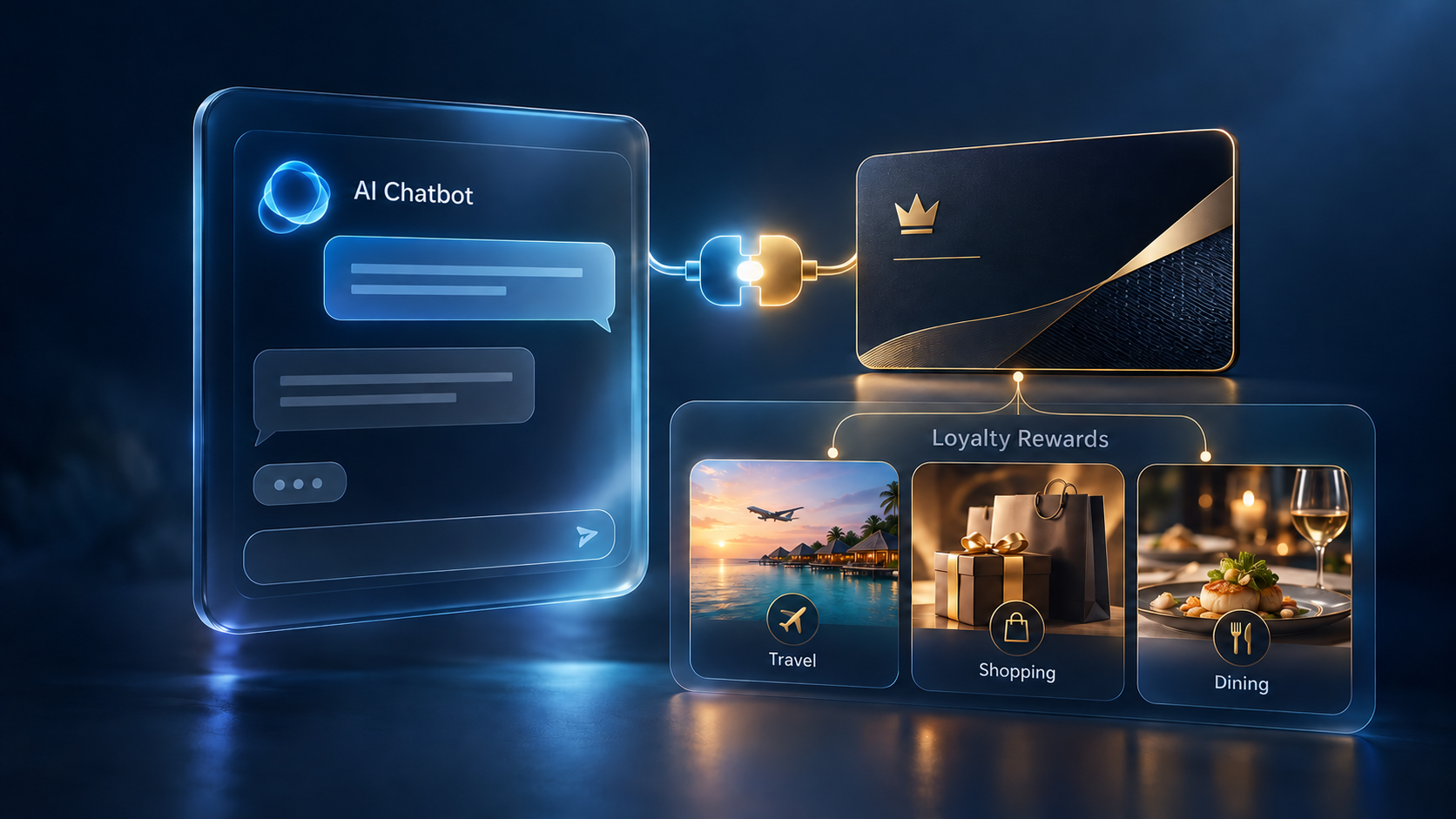
To build a ChatGPT plugin for a brand with a loyalty program in 2026, you stand up an MCP server that knows your members and partners, package it with skills and optional UI, connect member sign-in, and submit it to OpenAI's Plugin Directory. Launch is the easy part. The real work is keeping answers accurate, governed and attributed as members ask about everything from upgrades to dinner reservations.
This guide covers what a plugin is today, the nine steps to build one, four ways to get it done, and how to pick between them.
What a ChatGPT plugin is in 2026
A ChatGPT plugin is what OpenAI called a ChatGPT app until July 9, 2026. On that date OpenAI renamed apps to plugins and replaced the App Directory with the Plugin Directory (gradually.ai).
According to OpenAI's plugin documentation, a plugin combines three parts:
Skills: reusable instructions, scripts and resources that guide the plugin's workflows.
An MCP server: connects the plugin to your tools, data and services through the Model Context Protocol.
Optional UI: interactive components rendered inside the conversation.
A few facts worth knowing before you start:
The 2026 plugins share only a name with the 2023 ChatGPT plugins, which OpenAI shut down in April 2024 (Drag).
On September 11, 2026, OpenAI announced plans to retire custom GPTs and migrate them to plugins (Taskade).
MCP is an open standard. In December 2025 Anthropic handed it to the Agentic AI Foundation under the Linux Foundation, which OpenAI co-founded. The MCP server behind your ChatGPT plugin can also power a Claude connector and other assistants.
If your team built a ChatGPT app in 2025, it now ships as a plugin. Members and executives will use both names for a while.
Why brands with loyalty programs need one now
ChatGPT reached 900 million weekly active users in February 2026 (Wikipedia). Your members are already in that number, asking about trips, shopping, dining and events.
Assistants can't see what makes an answer personal. A general assistant can list the best restaurants in Boston. It can't see a member's balance, tier, bookings, partner enrollments or which offers they qualify for. A loyalty plugin brings that private member state into the answer.
Assistants can act. Once a member signs in, a plugin can enroll them in a partner program, activate an offer, redeem points, or buy with the card on file, all inside the conversation.
Members use more than one assistant. ChatGPT, Claude, Gemini, Copilot and Meta's assistant all compete for the same member. Building on MCP once lets you show up in several.
The space is still open. Most brand plugins today answer a few questions and send members to a website to finish. A brand whose loyalty program completes the job in chat stands out.
What a loyalty plugin has to do
A loyalty plugin carries more weight than a single-brand shopping plugin, because it speaks for the brand, its loyalty program and every partner in it. Plan for ten requirements:
Member sign-in through your own identity system (OAuth), sharing only what the member agrees to.
Private member state: balance, tier, status benefits, bookings, partner enrollments and eligibility.
Partner knowledge: which partner can answer which question, current offers, earn rates, and privileges like upgrades or reserved tables, plus location awareness for "near me" questions.
Actions: partner enrollment, offer activation, redemption, and purchases with points or a card on file where your program supports them.
Rich experiences: maps, carousels and offer cards instead of walls of text.
Guardrails: brand voice, scope limits, and a handoff to your own service channels for requests like a lost bag, all enforced on your server where competitors can't read them.
Attribution of every outcome back to the conversation, so partners and finance trust the numbers.
Cost control: caching for repeat questions and cost tracked per question.
Data protection: no training on member data, auditable logs, and an architecture that passes your security review.
Continuous change: new partners, seasonal content and new member questions every week.
How to build a ChatGPT plugin: 9 steps
These steps follow the plan, build, test and publish flow in OpenAI's plugin docs. Steps 1 through 8 are a project. Step 9 never ends.
Pick three to five member journeys. Good starters: trip planning, "what can I earn here," gift cards, partner enrollment and account questions. Mine your app search logs and contact center for the questions members actually ask.
Define your tools. One tool per job, with plain names and precise descriptions. The model reads those descriptions to decide when to call your plugin, so treat them like search metadata. Keep routing rules and business policy out of them (see the next section).
Build the MCP server. Connect it to your loyalty platform, member profile and partner offer data. Put guardrails, caching and logging here.
Add UI. OpenAI lists UI as optional. For loyalty it rarely is, since offers, maps and earn estimates read far better as components than as text.
Authenticate members. Wire OAuth into your member identity so the plugin can see balances and act on the member's behalf.
Write skills and package the plugin. Skills carry brand voice and repeatable instructions, such as how to explain status benefits. Bundle them with the MCP server.
Test in ChatGPT. Run every journey on web, desktop and mobile. Test out-of-scope requests and signed-out members as hard as the happy path.
Submit to the Plugin Directory. Check OpenAI's plugin guidelines and MCP server review requirements, and have your privacy policy, test accounts and listing metadata ready.
Run and improve. Track which assistants members come from, what they ask, which answers missed and what each question cost. Add partners and content, then republish.
The design mistake to avoid: business logic in tool descriptions
The most common flaw in published brand plugins is policy written into the tool descriptions. Every plugin publishes those descriptions so the host model can read them. Anyone who installs the plugin can read them too.
In recent travel plugins, roughly half of each description is traffic control: "use this tool instead of that one," "never call both in the same turn," "the user's latest phrase overrides an earlier flag." That creates four problems:
Your business logic is public. Routing rules, upsell order and what you choose to show or hide sit in plain text for any competitor to copy.
Someone else's model enforces your policy. ChatGPT, Claude and Gemini each interpret the same instructions differently, and behavior shifts with every model update. You can't test or tune it on your side.
Every change is a release. Adjusting one rule means rewriting descriptions, redeploying, and possibly going back through directory review.
It gets worse with each tool. Overlapping tools (lowest fare, specific dates, calendar, deals) each need more rules pointing away from the others. Plugins that pass a restated intent on every call are already re-parsing it on the server, without one place where that decision lives.
The better pattern keeps a thin tool surface and puts the decisions on your own server. A decisioning layer behind the MCP server resolves intent, applies guardrails, matches the right partners and picks the experience to render. Policy lives in a versioned, reviewed registry, so you change it without touching the tool contract, and the same answer reaches ChatGPT, Claude and your own in-app chat.
Narrow, typed tools still earn their place for deterministic lookups like fares, schedules and balances. The rule of thumb: describe what a tool does in the description, and decide when to use it on your server.
Four ways to build it, compared
Most brands with loyalty programs choose among four paths. The right one depends on how much of your partner ecosystem the plugin has to cover and who will run it after launch.
| Path | Best fit | Time to first plugin | After launch | Watch for |
|---|---|---|---|---|
| Build it yourself (simple MCP server over existing APIs) | One brand, a handful of account questions, strong engineering bench | Weeks for a prototype | Your team owns every change | Partner coverage, attribution, governance and other assistants all land on your roadmap, and routing logic tends to drift into public tool descriptions |
| Systems integrator custom build (Accenture, Deloitte and peers) | Large brands with loyalty programs and an existing SI relationship | Months | Custom code to maintain, with change requests for updates | Each new partner or journey becomes a new statement of work |
| AI add-on from your core loyalty engine | Balance, tier and account questions | Depends on the vendor's roadmap | The vendor ships what it ships | Coverage often stops at the program's own data, leaving partners out |
| Purpose-built loyalty AI platform (such as SmartCXP AI) | Brands with loyalty programs, benefits and partners that want several assistants and in-chat transactions | 30-day AI Forge preview on simulated data, then a 4-week proof of concept | Platform runs it, your team controls content and rules | Platform fee plus a share of incremental revenue |
How to choose
Answer six questions. If most of your answers match the first option, build it yourself. If most match the second, buy a platform and spend your team's time on the experience.
How many partners should the plugin cover? One brand, or dozens to hundreds across travel, shopping, dining and gift cards?
How many assistants? ChatGPT only, or also Claude, Gemini, Copilot and Meta's assistant?
Answers or actions? Read-only account questions, or enrollment, offer activation, redemption and purchases in chat?
Who runs it after launch? An engineering team with spare capacity, or product and digital teams who need to change content without a release?
What will security review ask for? Shared infrastructure, or a private per-brand environment with audit logs and no training on member data?
How will you prove value? Usage counts, or revenue attributed to partners and reported to finance?
Where SmartCXP AI™ fits
SmartCXP AI™ builds, runs and governs a branded MCP server for each brand with a loyalty program, delivering Agentic Loyalty Experiences™ in ChatGPT, Claude and other assistants. Dfinitiv launched it on October 7, 2026.
SmartCXP AI Forge lets product and digital teams build and evolve the plugin's experiences, tools and intents. Every change is versioned, with rollback.
SmartCXP AI Engine runs behind the MCP server: guardrails, reasoning, caching, cost management, auditing and content selection, inside the brand's private AWS environment on SmartCXP Cloud. It reads member data without training on it.
SmartCXP AI Center handles monitoring, audit, cost and coverage, including which assistants members arrive from and what they ask.
AI Forge builds it. AI Engine runs it. AI Center operates it.
SmartCXP AI runs on SmartCXP integration infrastructure already in production in the mobile app of a major U.S. airline's loyalty program, and brings those same flows into the assistant. Engagements start with a 30-day AI Forge preview on simulated data, followed by a 4-week proof of concept on your own partner ecosystem. Request a free AI Forge preview in your brand, or talk to the Dfinitiv team.
FAQ
Is a ChatGPT plugin the same as a ChatGPT app?
Yes. OpenAI renamed apps to plugins on July 9, 2026, and the App Directory became the Plugin Directory.
Do the original 2023 ChatGPT plugins still work?
No. OpenAI shut them down in April 2024. Today's plugins are built on MCP and are a separate system.
Can the same plugin work in Claude?
The MCP server can. Claude reaches it as a connector, and each platform has its own packaging and review, so plan one server with a listing per assistant.
Does a loyalty plugin need its own UI?
OpenAI treats UI as optional. Loyalty answers usually need it, because offers, maps and earn estimates are hard to read as plain text.
How do members sign in?
Through OAuth against your brand's own identity system. The member approves the connection inside ChatGPT.
Can a plugin complete a purchase or redemption?
Yes, once the member is signed in. OpenAI publishes conversion specs, including product checkout. What you enable depends on your loyalty program: points, a card on file, or both.
How long does it take?
A simple prototype takes weeks. A production plugin depends on partner coverage and security review. With SmartCXP AI™, a brand sees its own plugin in a free 30-day AI Forge preview, then runs a 4-week proof of concept.
Who should own the plugin?
Your product and digital team. The plugin changes every time a partner, offer or season changes, so it needs an owner who can update it without waiting on a release cycle.
About the Author
Joe Fitzgerald is Co-Founder and CEO of Dfinitiv, which builds SmartCXP, the AI-powered commerce experience platform for brands with loyalty programs. He previously co-founded Novadigm (acquired by HP) and ManageIQ (acquired by Red Hat), and at Red Hat he led the acquisition of Ansible and grew it into the category leader in IT automation. Connect on LinkedIn.
Sources
Plugin development for ChatGPT and Codex, OpenAI Developers
The New ChatGPT Plugins: Apps, Skills and MCP Explained, gradually.ai
ChatGPT Plugins in 2026, Taskade
ChatGPT, Wikipedia